
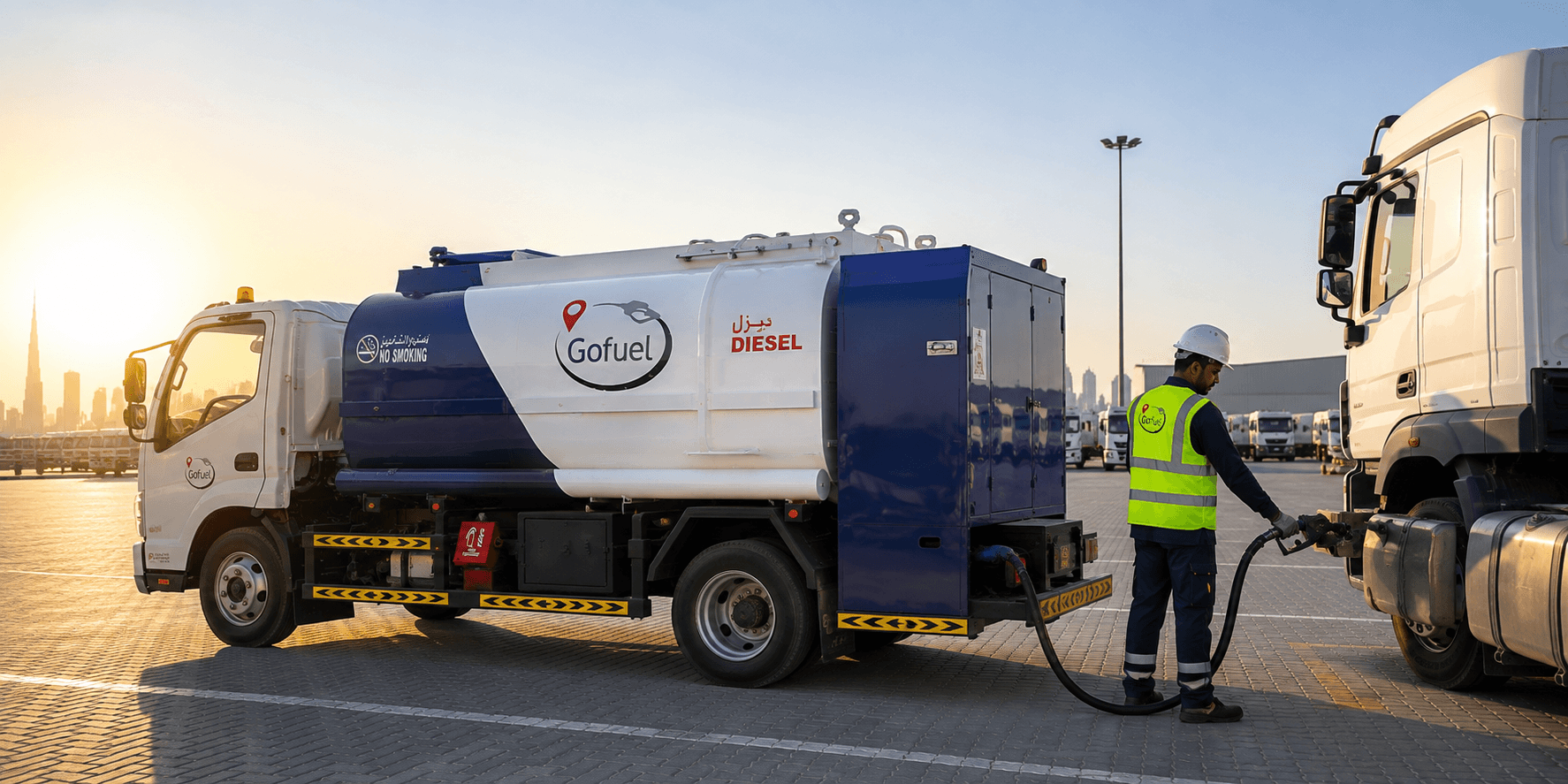
Managing a commercial fleet in the UAE involves more than keeping vehicles on the road. Fuel costs, refueling time, fuel consumption, and the risk of fuel loss can all affect operational efficiency and profitability.
For businesses operating logistics fleets, delivery vehicles, FMCG distribution networks, generators, forklifts, and heavy equipment, traditional refueling can create unnecessary downtime and administrative work.
This is where a fleet fueling partner can make a difference.
Modern fleet fueling solutions combine mobile fuel delivery, smart fuel cards, digital fuel management, and fuel monitoring technology to help businesses control fuel costs, reduce downtime, and gain better visibility over fuel consumption.
For UAE businesses in retail, logistics, FMCG, distribution, and manufacturing, efficient fuel management is becoming an important part of maintaining productivity and operational continuity.
What Is Fleet Fueling?
Fleet fueling is a fuel management solution designed for businesses that operate multiple vehicles or fuel-powered equipment.
Instead of requiring drivers to visit public fuel stations individually, businesses can arrange fuel delivery directly to their depot, warehouse, job site, or operating location.
A fleet fueling solution may include:
- Mobile fuel delivery
- Commercial diesel supply
- Smart fuel cards
- Digital fuel management
- Fuel consumption tracking
- IoT-enabled tank monitoring
The objective is simple: deliver fuel where it is needed while giving businesses greater control over how fuel is purchased and consumed.
1. Reduce Fleet Downtime
For commercial fleets, time is money.
Every time a driver leaves a route to refuel, the business potentially loses productive time through travel, waiting, and refueling. This becomes particularly significant for businesses operating dozens or hundreds of vehicles.
Mobile fuel delivery brings fuel directly to your fleet.
Fuel can be delivered to approved locations such as fleet depots, warehouses, logistics yards, construction sites, and manufacturing facilities.
This means vehicles can be refueled as part of their normal operating schedule rather than making unnecessary trips to public stations.
The result is less downtime, fewer detours, and more time spent on productive operations.
2. Improve Fuel Cost Control
Fuel is one of the largest recurring expenses for many fleet operators. However, the true cost of fueling goes beyond the price per litre.
Businesses also need to consider:
- Driver time spent refueling
- Vehicle mileage to fuel stations
- Administrative work
- Manual receipt management
- Unexplained fuel consumption
- Fuel losses and leakage
A centralized fleet fueling solution can help businesses gain a clearer view of their overall fuel expenditure.
For larger fleets, commercial fuel purchasing may also provide opportunities for structured pricing based on factors such as volume, fuel type, and delivery requirements.
3. Improve Fuel Accountability
Fuel losses can be difficult to identify when businesses rely entirely on paper receipts or manual spreadsheets.
A fuel transaction may show that fuel was purchased, but it may not explain why a vehicle or equipment consumed more fuel than expected.
Modern fuel management systems and IoT-enabled sensors can provide additional visibility into fuel activity.
Depending on the technology used, businesses can monitor:
- Fuel purchases
- Fuel consumption
- Tank levels
- Refueling activity
- Vehicle or equipment usage
- Unusual consumption patterns
This gives fleet managers better information to identify discrepancies and investigate potential fuel losses, leakage, or unauthorized usage.
4. Simplify Fuel Management With Smart Fuel Cards
Managing fuel across multiple vehicles can quickly become an administrative challenge.
Smart fuel cards can help businesses centralize fuel transactions and monitor expenditure across their fleet.
Depending on the system, businesses can track fuel spending by:
- Vehicle
- Driver
- Department
- Project
- Cost center
This provides finance and fleet teams with better visibility and reduces dependence on paper receipts and manual records.
For businesses managing large fleets, this can make fuel reporting and cost analysis considerably easier.
Fleet Fueling Solutions for UAE Industries
Different industries have different fueling requirements.
Retail & Distribution
Retail distribution fleets operate on tight delivery schedules. On-site fueling can help delivery vehicles refuel at their depot instead of making additional trips to public fuel stations.
Logistics & Supply Chain
For logistics companies, vehicle availability directly affects delivery performance. Mobile fuel delivery and digital fuel tracking can help reduce refueling-related delays while improving fuel visibility across the fleet.
FMCG
FMCG businesses often manage high-frequency delivery networks across supermarkets, pharmacies, and retail outlets. Centralized fuel management can help monitor expenditure across vehicles and locations while reducing unnecessary fuel-station visits.
Manufacturing
Manufacturing facilities may use diesel for vehicles, generators, forklifts, and other equipment. On-site fuel delivery and tank monitoring can help businesses maintain fuel availability and plan replenishment more efficiently.
Why Choose GoFuel?
GoFuel provides fleet fueling solutions designed around the requirements of UAE businesses.
By combining fuel delivery with digital fuel management, GoFuel helps businesses simplify how they purchase, receive, monitor, and manage fuel.
Solutions can include:
- Mobile fuel delivery to business locations
- Smart fuel cards for controlled fuel expenditure
- Digital fuel management for improved visibility
- IoT-enabled monitoring for supported tanks and equipment
- Commercial fuel solutions for recurring fuel requirements
- Scalable support for growing fleets and operations
Whether you manage a logistics fleet, FMCG distribution network, retail delivery vehicles, or an industrial facility, effective fuel management can help improve operational control and reduce unnecessary fleet downtime.
The Bottom Line
A fleet fueling partner is not simply a convenient alternative to public fuel stations. For businesses operating multiple vehicles or fuel-powered equipment, it can become an important part of cost control, fleet efficiency, fuel accountability, and operational continuity.
With mobile fuel delivery, smart fuel cards, digital reporting, and fuel monitoring technology, UAE businesses can move from reactive fuel management to a more structured and data-driven approach.
If your business is still managing fleet fueling manually, 2026 could be the right time to rethink your fuel strategy.
Ready to Improve Your Fleet Fuel Management?
Talk to Gofuel about mobile fuel delivery and smart fuel management solutions designed for UAE businesses.
Frequently Asked Questions
What is a fleet fueling partner?
A fleet fueling partner helps businesses manage fuel supply and consumption for commercial vehicles and fuel-powered equipment through services such as mobile fuel delivery, smart fuel cards, and digital fuel management.
How does mobile fuel delivery work in the UAE?
A fuel provider delivers fuel directly to an approved business location, depot, fleet yard, or operating site, reducing the need for vehicles to make separate trips to public fuel stations.
Can smart fuel cards help control fuel costs?
Yes. Smart fuel cards can help businesses monitor fuel transactions and expenditure by vehicle, driver, department, or other predefined controls.
Which UAE industries benefit from fleet fueling?
Logistics, transportation, retail distribution, FMCG, manufacturing, construction, and other businesses operating multiple vehicles or fuel-powered equipment can benefit from fleet fueling solutions.
Can fleet fueling help reduce fuel theft?
Fuel monitoring systems can improve fuel accountability by comparing fuel transactions, consumption data, and tank-level information, helping businesses identify unusual patterns or discrepancies.